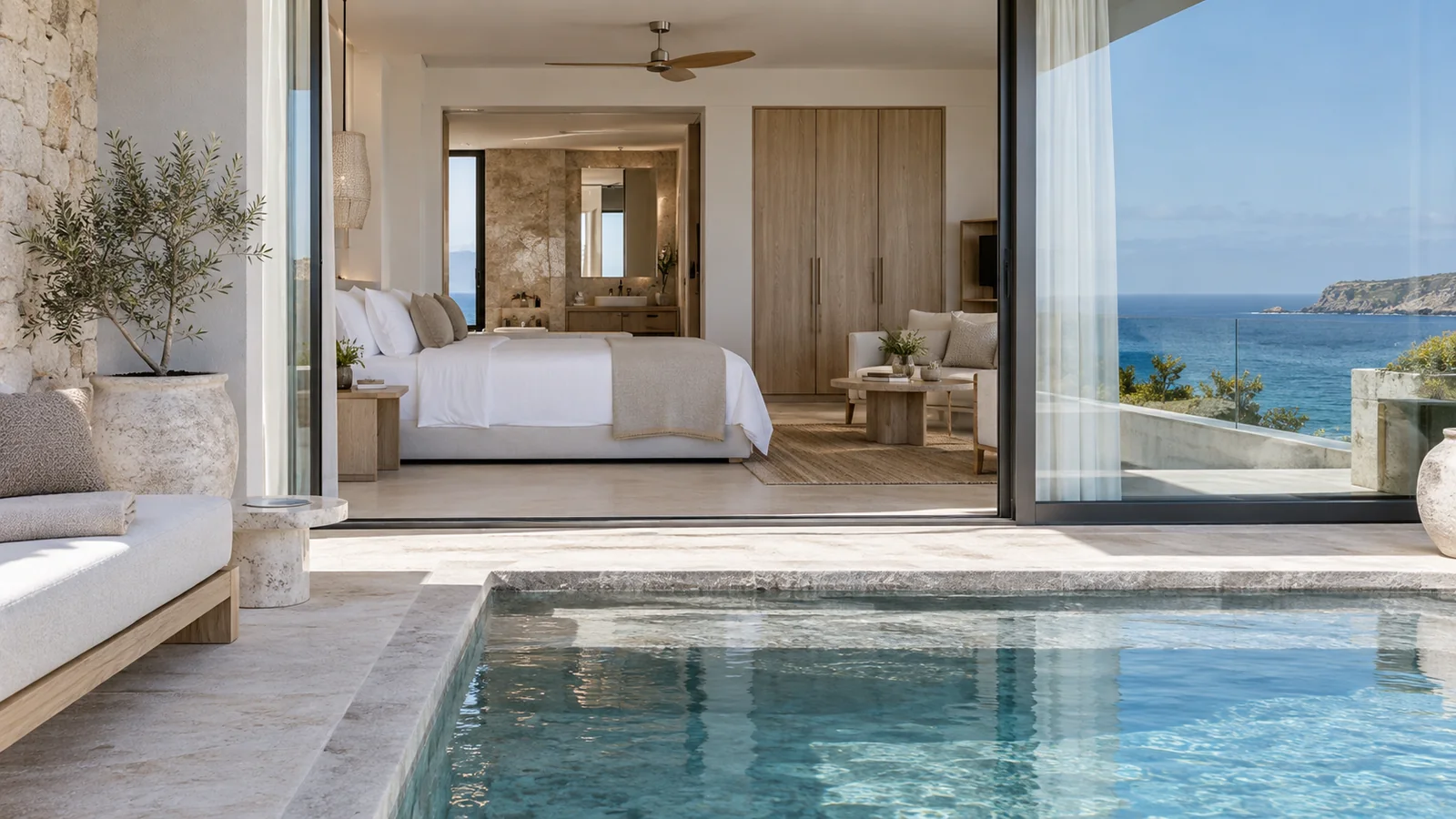
Translate room names into useful differences.
A guest should not have to open six galleries to discover which room has the terrace. Give room categories a consistent summary: bed arrangement, occupancy, outlook, outdoor space, and the features that genuinely distinguish them. Keep the expressive name, but put a plain description alongside it. A small property can often achieve this with a carefully edited comparison rather than a complicated filter.
Let photography answer questions.
A close view of linen may set a mood, but it cannot explain a room’s layout. Build a sequence that moves from the whole space to the sleeping area, bathroom, outlook, and relevant details. Avoid hiding essential information inside an image or relying on an animated gallery as the only route through it. Captions can help where a photograph needs context.
Make the handoff explicit.
Follow the booking call to action on a phone and observe what arrives at the provider. Does the selected room remain selected? Are guests asked for dates again? Is the property identity still clear? Some behaviors depend on the reservation platform and its supported links. Document what is possible before promising a seamless integration, and explain any unavoidable change of context through clear labels.
Keep reassurance close to the choice.
Guests may hesitate because they cannot find the policy that matters to their trip. Link to current cancellation, arrival, and payment information where it helps them make the decision, using details approved by the property. Do not bury every answer in a single long FAQ. Place information near the relevant choice and provide a contact route for questions the website cannot settle.
Review the whole path, not only the first click.
A practical review starts with a realistic task: find a room for a particular party, understand its differences, and reach the relevant availability screen. Record confusing labels and repeated steps. If analytics are used, distinguish a click toward booking from a completed reservation; they are different events. A design can support the journey without making unsupported promises about the resulting booking rate.