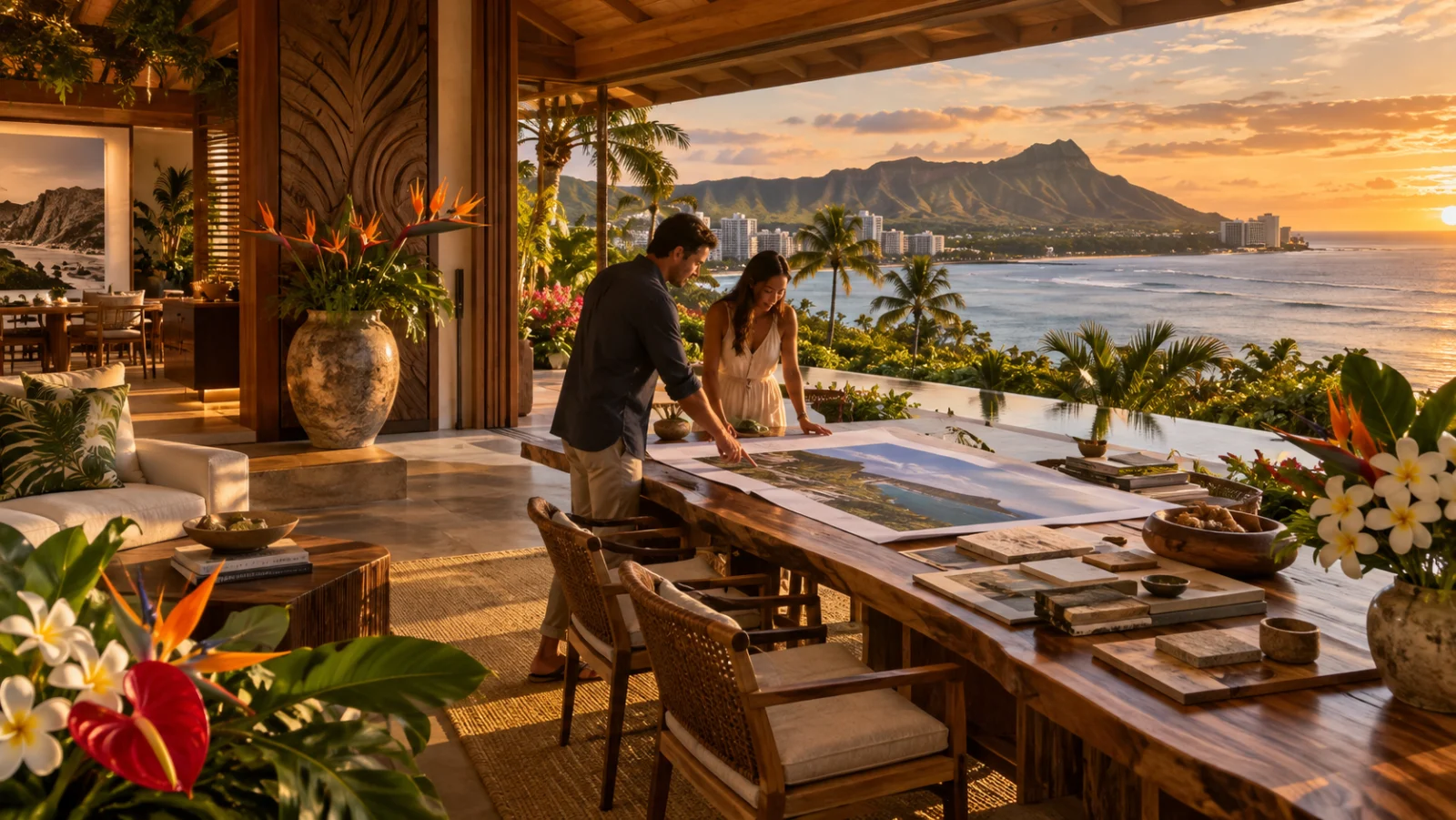
Choosing a web designer is partly a question of taste. You should want to spend time inside the work they make. It is also a question of judgment: can this person translate what makes your business distinctive into a website people can understand and use? In Hawaiʻi, that may mean welcoming a returning local customer and someone planning a first visit from another country, on the same small screen.
A beautiful portfolio is a beginning. These ten questions help you look beneath the opening image and understand how a designer thinks, works, and takes care of the details. Ask them by email if that suits you. A thoughtful written answer is useful long after the first conversation.
1. How will you learn what makes our business different?
Listen for a process that begins with your audience, offering, and setting. A hotel, wedding venue, and wellness practice should not receive the same brief with different photographs. Ask what the designer needs from you and how they turn that material into decisions. They should be able to explain why one story belongs first, what practical information deserves prominence, and where the website needs to be quiet. Discovery should produce shared understanding, not simply a mood board you are expected to approve without context.
2. Can you explain one design decision in your work?
Choose a page you like and ask why it is arranged that way. A useful answer connects atmosphere with a task: comparing rooms, reading a menu, understanding a service, or beginning an inquiry. You are listening for reasoning rather than fashionable vocabulary. Also ask whether the example is client work or an original demonstration. Both can reveal design ability when labeled honestly. Neither should be accompanied by invented results. A designer who explains the limits of an example gives you a clearer basis for trust.
3. Who is the website being designed for?
Ask how the designer will distinguish resident customers, repeat visitors, and people planning a trip from afar. A restaurant guest on Oʻahu may need tonight’s hours; someone in Japan may need help understanding the dining experience before arranging an itinerary. These are possible visitor needs, not demographic assumptions. Your own team can identify the questions that recur. The designer should turn that knowledge into navigation, content, and a clear next step, rather than adding a location word repeatedly and calling the website local.
4. What exactly is included in the proposal?
Request a plain description of page types, content work, image preparation, integrations, revisions, testing, and launch. Confirm which assets you supply and who approves business information. If something sits outside the scope, ask how it will be estimated before work starts. This is especially important when a booking platform, membership tool, or existing database is involved. A proposal should make the project easier to understand. You should not need to infer a major responsibility from a vague line such as complete website setup.
5. How do you handle phones and accessibility?
Ask to see an actual phone layout, not a desktop page inside a device frame. Check whether text is comfortable, menus open predictably, and important actions remain easy to reach. Ask about keyboard access, visible focus, contrast, descriptive labels, and reduced-motion preferences. No short answer proves complete accessibility, and a designer should not imply that one automated score does. What matters is whether these needs are part of the working process and whether testing covers ordinary tasks with more than one method of interaction.
6. What happens at the booking or inquiry step?
Have the designer follow the entire path, including any external provider. Does the selected service remain clear? Is the visitor told where they are going? Who receives the inquiry, and what happens if delivery fails? These questions concern the business, not only the interface. A fictional demonstration must keep its non-submitting behavior clearly labeled. Your live site needs a confirmed operational route. Avoid approving an attractive form before anyone has established where its information goes and who takes responsibility for replying.
7. What does search preparation include?
Ask about descriptive titles, useful content, internal links, mobile performance, canonical URLs, and accurate business information. Request an explanation of how these decisions help people and search tools understand the site. Be cautious about guaranteed positions or invented traffic forecasts. A local phrase cannot compensate for an unclear service page. Our web design in Hawaiʻi hub explains how the business story and technical foundation fit together. A designer should distinguish the work they can deliver from search outcomes they cannot control.
8. Can we work clearly across time zones?
Ask how feedback, approvals, and questions are organized. A team on Hawaiʻi time may be coordinating with an owner on the mainland or a partner in Japan. Written checkpoints can help everyone see the same decision without arranging repeated meetings. Confirm who can approve the work and how conflicting feedback is resolved. The goal is a manageable process, not constant availability. Evermore can work through the project by email, with the scope and schedule confirmed in the written proposal before the work begins.
9. Who owns the website and its accounts?
Clarify ownership of the domain, hosting account, source files, content, and third-party subscriptions. Ask what you receive at launch and what happens if another person maintains the site later. Image licenses and font permissions should also be understood. You do not need to become a developer to ask these questions. A calm, specific answer protects the continuity of your business. Your website should not depend on an undocumented account that nobody on your team can access or identify when an update is needed.
10. What care will the website need afterward?
Discuss updates, backups, monitoring, editing, and the route for requesting changes. Match that plan to your actual operation. A venue may change layouts seasonally; a restaurant may change menus much more often. Explore a relevant example such as Amoret, An Evermore Original, then read our wedding venue website design approach to see how feeling and practical information can work together. When you are ready, contact Evermore with your website and priorities. Choose the partnership whose decisions you understand, whose work you value, and whose process you can comfortably sustain.
Tell us about your place.