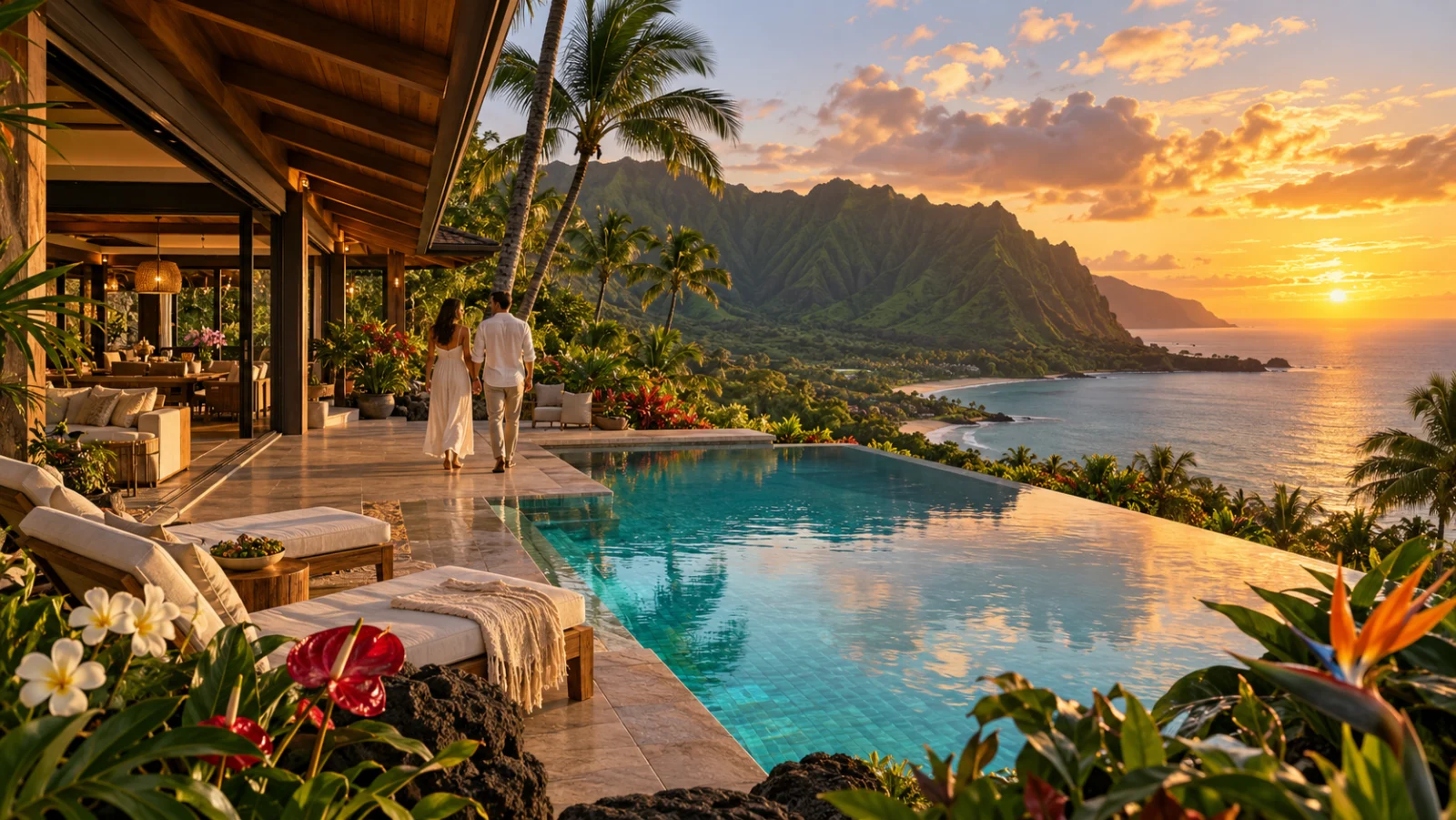
A buyer viewing a home in Hawaiʻi from elsewhere is trying to understand more than a collection of beautiful rooms. They need a sense of the property’s position, the way its spaces connect, and the experience of moving through it. The website cannot replace a visit or professional advice. It can make the next conversation more informed by presenting the home clearly and keeping changing facts under the right people’s control.
For a real estate team, that means treating photography, information, and inquiry as one editorial system. A cinematic page should draw someone in without making them guess what they are looking at or mistake a visual story for a verified claim.
Establish the setting before the detail
Begin with a view that explains the relationship between the home and its surroundings. Show the approach, orientation, and connection between indoor and outdoor space using approved material. Identify the island and neighborhood accurately. A buyer unfamiliar with Oʻahu or Hawaiʻi Island may not understand a local reference that feels obvious to the listing team. Avoid turning a nearby amenity into an implied property feature. The first section should give enough context to make later photographs meaningful, rather than using a dramatic coastline image that could belong anywhere.
Build a sequence people can follow
Arrange the gallery as a visit: arrival, main living spaces, outdoor areas, private rooms, and relevant details. Include whole-room images as well as close views of materials. A sequence made entirely of stone, linen, and sunsets can be atmospheric while leaving the layout unclear. If approved floor plans are available, place them where they help a visitor understand relationships. Label photographs and plans consistently. Do not rely on a moving slideshow to convey essential information; give visitors enough control to pause, compare, and return to a room that interests them.
Keep specifications traceable
Area, bedroom count, features, availability, and listing status should come from the authorized source your team uses. Agree who approves them and how updates reach the site. If an inventory feed is involved, confirm its permissions, attribution requirements, and supported fields before designing around it. Do not fill gaps with an attractive guess. This article concerns website presentation, not advice about property law, taxes, financing, or investment. Questions in those areas belong with the appropriately qualified professional, and the website should provide a clear route to that conversation.
Show a lifestyle without making promises
The lanai at sunset or a garden breakfast can help someone imagine daily life. Keep the story grounded in what the property actually offers. Distinguish staged styling from permanent inclusions, and label illustrative material honestly. Do not imply private access, uninterrupted views, or a permitted use unless the listing team has approved the statement. A photograph can suggest more than its caption explicitly says, so review the combination. The strongest luxury presentation is specific and composed; it does not need to turn every beautiful detail into an expansive claim.
Make remote questions easier to ask
A buyer on the mainland or in Japan may be reading while the team in Hawaiʻi is away from the desk. Offer a straightforward written inquiry route that carries the property name or identifier with the message. Ask for enough information to begin, without making someone disclose unnecessary personal or financial details. Explain the next step using wording the team can support. If appointments or virtual visits are offered, describe the process accurately and keep scheduling confirmation with the responsible person. The interface should not suggest that a requested appointment is already accepted.
Decide what translation needs to cover
If your team serves buyers in another language, identify the material that needs professional translation and the person responsible for maintaining it. A translated introduction with an untranslated inquiry or listing document may create an inconsistent journey. Review property names, measurements, and practical instructions carefully. Do not assume language preference from a visitor’s country. Give people an understandable choice and explain where further assistance is available. The operational team should approve the supported service rather than letting a language selector imply capabilities the business does not actually provide.
Match discovery to the size of the collection
A small architectural collection may benefit from an edited overview with clear distinctions. A larger inventory may need search and filters supported by dependable data. Decide which model fits before adding controls. A filter is only useful if the underlying fields are complete and current. Keep empty states understandable and provide a way back to the collection. If a visitor reaches a listing that is no longer available, help them understand its status and find the appropriate next step instead of leaving an attractive page that appears to offer a home it cannot.
Respect the practical limits of media
Large photography and video can reveal a property beautifully, but they should not prevent the page from becoming useful. Prepare responsive images and avoid downloading every gallery item before the first screen appears. Give important images accurate alternative text; do not use it as a list of search phrases. Check maps and third-party tours before embedding them, including what information they send elsewhere. Offer a clear fallback when a tour cannot load. A buyer should still be able to understand the property and contact the team without depending on one heavy interactive feature.
Make trust visible in the ordinary details
Show the authorized business identity, contact route, and current listing information consistently. Use testimonials only with permission and preserve their context. Avoid invented buyer stories, sales results, or claims about returns. Check that the website, profile listings, and operational documents do not contradict one another. Our real estate website design service approaches the property story alongside these practical needs. The web design in Hawaiʻi hub explains how the broader site can express a business while remaining clear about what it does and who it serves.
Review the property as a distant visitor
Ask someone unfamiliar with the home to explain its setting, layout, and next step after viewing the page on a phone. Their uncertainty is useful material for the next edit. Lanikai Collection, An Evermore Original, demonstrates an architectural collection through invented properties; it is not an active listing service or a record of sales. Explore the presentation, then contact Evermore with your current site and authorized content sources. A considered website gives the property room to be beautiful while helping the right questions reach the right people.
Tell us about your place.