One guest knows your restaurant well and wants to check the menu before leaving home. Another is planning an evening in Hawaiʻi from a different time zone and wants to understand whether the place belongs in their trip. They may arrive at the same homepage with very different questions. A thoughtful restaurant website makes room for both, without forcing either person through an elaborate introduction.
The answer is rarely two separate websites. It is a clear relationship between the practical essentials and the atmosphere of the room. Let someone find dinner quickly, and give someone else a reason to imagine the evening in detail.
Keep everyday essentials close
Menus, hours, location, and the reservation route should be easy to find from the first screen. A returning guest should not have to watch a long animation to reach them. On a phone, check whether the labels remain legible and whether the menu opens as expected. If you accept walk-ins or use a waiting list, describe the current arrangement accurately. If those details change, give one team member responsibility for updating them. An expressive opening photograph can coexist with clear navigation; the design does not need to choose between usefulness and atmosphere.
Let the menu read like a menu
Publish readable text wherever practical, with useful headings and comfortable spacing. A large image of a printed menu can look attractive while remaining difficult to read on a phone. A printable PDF can be an alternative rather than the only option. Label sample menus honestly and identify when a price or dish needs confirmation. Dietary descriptions should come from the team responsible for the food. Do not let a design label become an unsupported promise about ingredients or preparation. The website should make the kitchen’s approved information clearer, not embellish it.
Give first-time visitors a sense of the evening
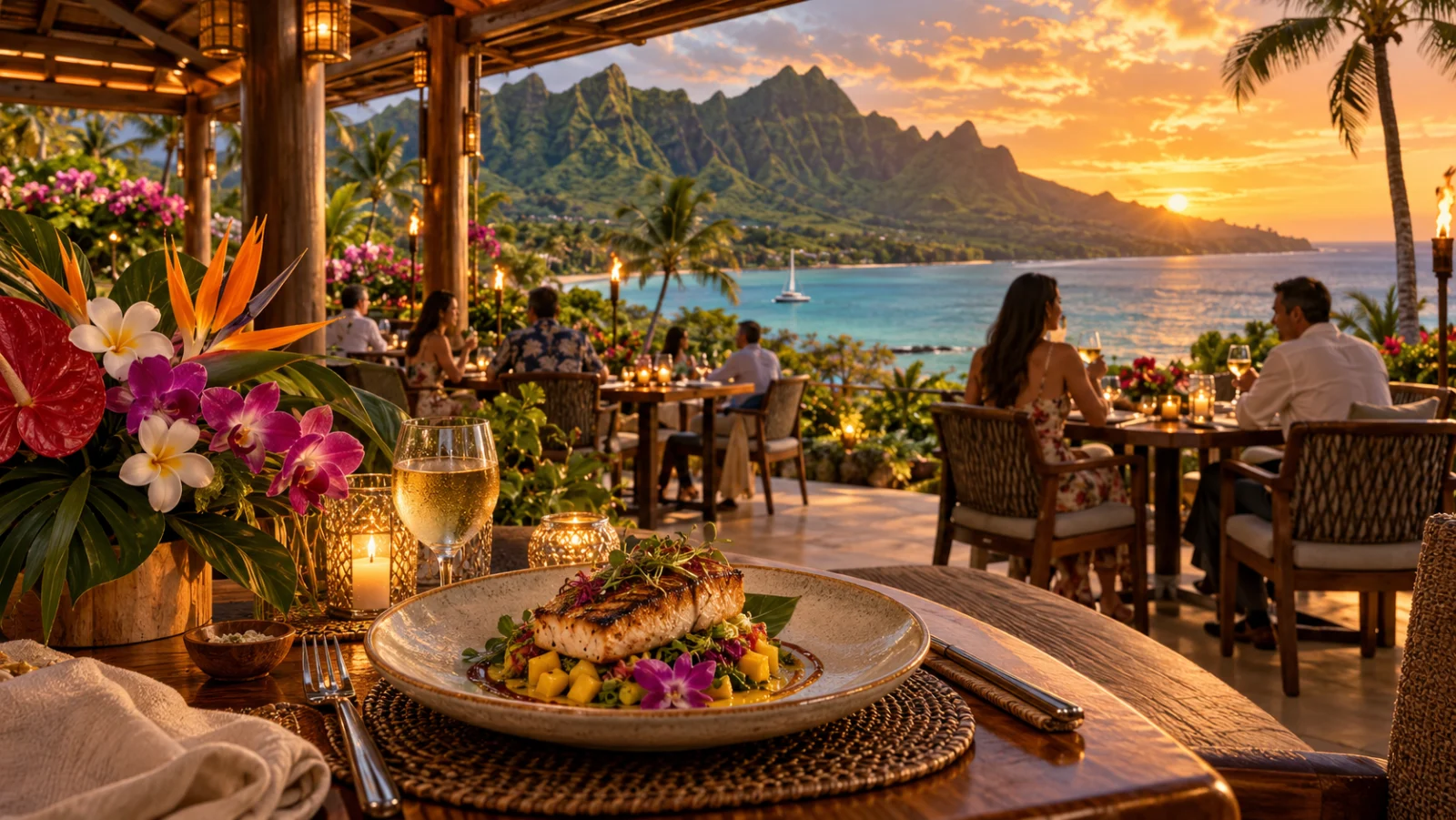
A guest arranging a special dinner wants more than an inventory of dishes. Show how the room changes as daylight softens, what the table feels like, and how the restaurant relates to its setting. Use images of food, space, and people with different purposes rather than repeating one dramatic view. Describe the experience in the restaurant’s own voice. A detail about the cooking or the room is more useful than a broad claim of being unforgettable. Let photographs carry feeling while concise words help someone decide whether the evening suits them.
Help visitors arrive without guessing
Confirm the address, entrance, parking guidance, and any practical arrival notes with the restaurant team. A visitor may recognize a neighborhood name but not know which doorway leads to the dining room. A local guest may need a different detail, such as whether a familiar entrance is temporarily closed. Keep directions useful rather than turning them into a travel article. If the restaurant is inside a hotel or shared property, explain the route plainly. Correct island and place names matter, especially when a visitor is planning several stops across Hawaiʻi.
Treat translation as a service decision
If your team regularly welcomes guests who prefer Japanese or another language, identify which information needs professional translation and who will maintain it. Menus, reservation instructions, and arrival details may have different update cycles. A partial translation should not imply that every linked booking screen or confirmation is available in the same language. Test the full journey and state its boundaries clearly. Avoid assuming that all visitors from a country have the same needs. Your own guest questions and staff knowledge are a better brief than a language switch added simply because it looks international.
Keep reservations and private events distinct
Booking a table for dinner is a different task from planning a celebration or corporate gathering. A private-event organizer may need capacity, possible layouts, a menu approach, and a person who can discuss requirements. Give that visitor a separate path. Ask only for the information needed to begin, such as a date, group size, and occasion. Keep availability, pricing, and commitments under the restaurant’s control. A polished event page should help the team prepare a useful response, rather than implying that an inquiry has already secured the space.
Make time clear where it matters
Visitors planning from the mainland or Japan may be making a reservation while the restaurant is closed. Display operating hours clearly and explain any approved response window for event inquiries. When the website shows a dated event or booking confirmation, make the relevant time zone understandable. Do not rely on a visitor’s device to infer the restaurant’s local schedule. If a reservation provider manages availability, that provider should remain the operational source. Review the handoff on an ordinary phone to catch repeated questions, unclear dates, or a sudden loss of the restaurant’s identity.
Give imagery and performance the same attention
A luminous photograph can establish the room beautifully, but an oversized file can make the first visit feel hesitant. Prepare responsive images, reserve their space, and load lower-page photography when it is needed. Put essential text in the page rather than inside an image. Keep people’s faces clear of headings and controls at phone widths. Where imagery is illustrative, label it honestly rather than letting a visitor mistake a generated setting for the actual restaurant. The aim is a convincing welcome built from accurate material, delivered without making the guest wait unnecessarily.
Test two ordinary journeys
First, act as a local regular: find tonight’s hours, read the menu, and reach reservations. Next, act as a first-time visitor: understand the food, the atmosphere, the location, and the next step. Note where either journey stalls. Kai Table, An Evermore Original, demonstrates one restaurant website direction without claiming client results. Explore our restaurant website design approach, read about web design in Hawaiʻi, or contact Evermore. A good restaurant website leaves room for anticipation while taking excellent care of the ordinary questions that bring someone to the table.
Tell us about your place.