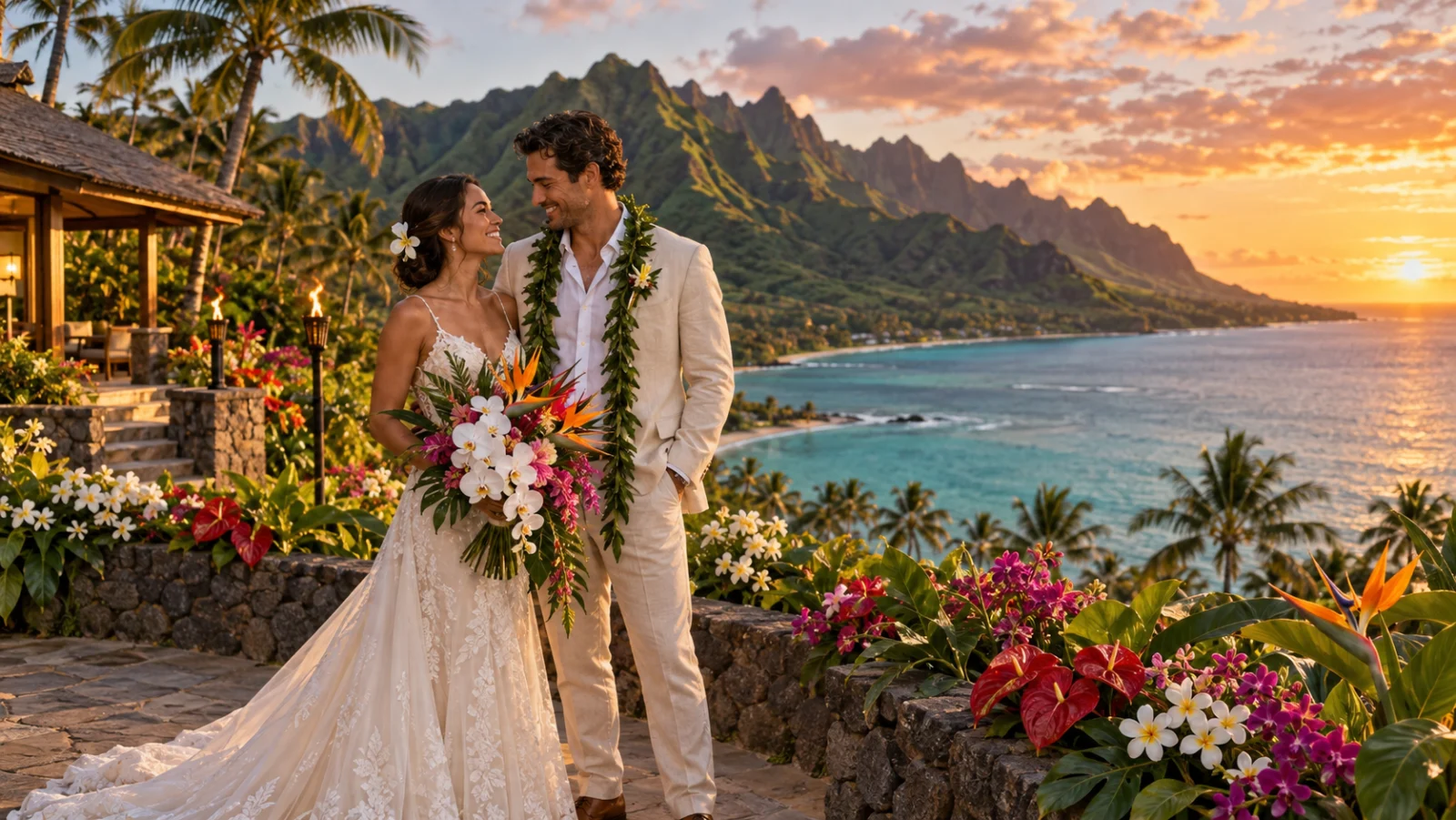
A couple planning a celebration in Hawaiʻi may first meet your venue from a kitchen table thousands of miles away. They can see the sunset. What they cannot yet see is how the day would work: where everyone gathers, what happens after the ceremony, and which arrangements your team can help them make. The website needs to hold those two experiences together, the emotional arrival and the practical understanding.
That does not mean putting a planning manual before the photographs. It means giving each beautiful image a useful place in the story. A destination couple should leave the page with a clearer picture of the celebration and a sensible reason to inquire.
Show the sequence of the day
Organize imagery around an actual journey through the property. Show the approach, the ceremony setting, the place for drinks, the dinner arrangement, and the evening atmosphere. If the spaces are close together, help visitors understand that relationship. If moving between them requires transport or coordination, explain the arrangement your team actually supports. A wide photograph can establish scale; a closer detail can convey texture. Avoid repeating the same sunset until every part of the day seems to happen in one indistinguishable place. Couples need a story they can follow.
Make capacity meaningful
A guest count needs context. Explain which setting the number describes and whether it refers to a seated dinner, ceremony, or standing reception. If arrangements vary, describe the relevant options without implying that every layout is always available. Put confirmed details close to the photographs they explain. A couple should not need to download a document merely to discover that their group cannot fit. Keep changing operational facts under the venue team’s control and identify the person responsible for checking them before publication. Precision can feel gracious when it is presented calmly.
Distinguish the venue from the event styling
Flowers, furniture, lighting, and a beautiful table can make a photograph irresistible. They can also imply inclusions that the venue does not provide. Label styled shoots and illustrative images honestly. Explain what belongs to the property and what is arranged with a planner or supplier. If an image shows an optional configuration, say so near the image. This helps couples admire the possibility without mistaking it for a package promise. Beautiful presentation is more convincing when a visitor understands exactly what is permanent, what is flexible, and what needs a separate conversation.
Give travel questions a visible home
Destination planning includes people who have never visited the island. Offer venue-approved arrival guidance, useful accommodation context, and a clear explanation of the surrounding area. Be specific about the island and the property rather than treating Hawaiʻi as one interchangeable destination. Guests coming from the mainland or Japan may need to coordinate different travel dates and time zones. Your site can explain where to find current logistics without predicting flights or providing outdated travel promises. A short, well-maintained practical section is often more useful than an expansive guide nobody owns.
Explain weather and alternatives honestly
An oceanfront photograph may suggest that every celebration takes place outdoors. Couples also need to understand the venue’s actual alternatives and decision process. Describe confirmed covered spaces or indoor arrangements where they exist. If the plan depends on rentals or a planner, explain that responsibility. Do not turn a seasonal description into a weather guarantee. Let the team confirm arrangements for the proposed date and event. The design can make these questions feel like part of thoughtful hosting, with a clear heading and a direct answer, rather than a warning hidden in small print.
Help couples understand the approach to pricing
If the venue publishes prices, show current, approved information with a clear explanation of what it covers. If pricing is tailored, explain which details help the team prepare a proposal: date or season, approximate guest count, spaces, and the kind of celebration. Avoid a vague inquiry button that leaves visitors wondering whether they are asking about the venue, catering, or an entire wedding. A clear description of the proposal process gives the next step shape. It should not suggest that a date is reserved or that availability has been confirmed simply because someone submitted a form.
Make the first inquiry easy
Ask for enough information to begin a useful reply, without requiring a complete wedding plan. A preferred date or season, approximate group size, contact details, and a short description may be a sensible starting point. Mark optional fields clearly and test the form on a phone. Keep the message and its source attached to the inquiry so the team knows which setting interested the couple. Explain what happens next using a response window your venue has approved. Never promise instant personal attention if the operational process cannot reliably provide it.
Respect the place and the people in the story
A destination wedding website should be specific to its setting without borrowing cultural language as decoration. Use correct place names and spelling, seek informed review where cultural knowledge is involved, and distinguish Native Hawaiian identity from residence in Hawaiʻi. Ask permission for people’s images and stories. Warmth does not require a repeated vocabulary of paradise. It can come from clear information, thoughtful photography, and the care with which visitors are welcomed. The property’s own materials, landscape, relationships, and hosting approach offer a stronger starting point than a generic island mood.
Review the page as a couple would
On a phone, find the ceremony setting, understand dinner capacity, locate practical travel information, and begin an inquiry. Then ask what you remember about the feeling of the venue. Both parts matter. Amoret, An Evermore Original, explores one possible wedding website direction; it is an original demonstration, not a client venue or evidence of results. Our wedding venue website design service and web design in Hawaiʻi hub explain the approach. Contact Evermore when you want to connect the beauty of your place with a clearer path into the conversation.
Tell us about your place.