A website can be beautifully designed and still be careless with the language of the place it describes. In Hawaiʻi, spelling is part of that care. The marks in a name are not decorative details to remove when a heading becomes inconvenient. Nor is a Hawaiian word an atmosphere to borrow simply because an English sentence seems too ordinary.
For a business website, a responsible starting point is modest: use accurate names, understand who can review the language, and make the words work properly in the design. This is a practical editorial and production guide, not a substitute for a qualified Hawaiian-language practitioner or the people whose knowledge a story involves.
Begin with people and purpose
Before choosing a Hawaiian name for a package, room, treatment, or restaurant, ask why the word belongs there. Who proposed it? Who understands its meaning and context? Who has permission to tell the associated story? A word selected from a dictionary can require more context than its short English gloss suggests. Build informed review into the brief rather than asking for a quick blessing after the brand is finished. If that review is not available, clear English may be the more respectful choice while the team gathers the right guidance.
Treat the marks as part of the word
The University of Hawaiʻi’s Hawaiian language considerations distinguish the ʻokina from a quotation mark or a tick mark and explain the use of vowels with kahakō. Their guidance also recommends appropriate language resources and informed review. Use the actual characters rather than a visual approximation. Preserve the spelling supplied and approved by the relevant person or organization. When a source is uncertain, record the question for review instead of letting a designer guess from the appearance of the word.
Create a small approved language sheet
Keep a shared list of the place names, personal names, business terms, and recurring phrases the website uses. Record the approved spelling, the source of that approval, and any restrictions on use. Include the person responsible for future questions. This sheet does not need to become a large brand manual. It needs to stop the same name appearing differently in the menu, footer, booking instructions, and email template. It also gives translators, writers, and developers one reference instead of several conflicting documents that gradually diverge after launch.
Check the typography with real words
A typeface can look beautiful in a sample and fail when the actual website text is introduced. Test the approved names at headline size, navigation size, and normal paragraph size. Look for missing glyphs, awkward spacing, or clipping above capital letters. Check the fallback font as well as the preferred font. The design should accommodate the language rather than forcing the spelling to accommodate a narrow text box. Review on a phone, where a long name may wrap differently, and keep it as selectable text instead of flattening it into an image.
Carry the spelling through the whole website
Visible paragraphs are only one part of the work. Review page titles, descriptions, image captions, alternative text, structured data, form labels, and automated messages that your team controls. Search for older versions of the same name and assess them individually. Do not run an indiscriminate replacement across personal names or quoted material. A person’s own preferred spelling deserves respect. Where an external booking system has technical limitations, document the boundary and ask its provider what is supported rather than silently changing the approved language everywhere else.
Make accessibility part of language review
Check whether a visitor can select, copy, search, and navigate the text. For passages in Hawaiian, use an appropriate language attribute and test the reading experience with assistive technology. Browser and screen-reader behavior can vary, so avoid assuming that correct appearance proves correct pronunciation. Include language handling in the development checklist and document any limitation that needs follow-up. A careful implementation should also preserve normal line breaks, visible focus, and comfortable text size. These practical checks give the words a better chance of surviving beyond the designer’s own screen.
Separate search phrases from respectful body copy
People may type a place name without its marks when searching. That does not require removing correct spelling from the article they read. A clear title can reflect a common search phrase while the body uses approved Hawaiian orthography. Choose one canonical page rather than creating near-duplicates for every spelling. Keep addresses and business names consistent with their authoritative source. Search preparation should help people find accurate information, not turn language into a repetitive keyword exercise. For Evermore, web design in Hawaiʻi is one connected story, not a set of competing location pages.
Be careful with cultural stories and imagery
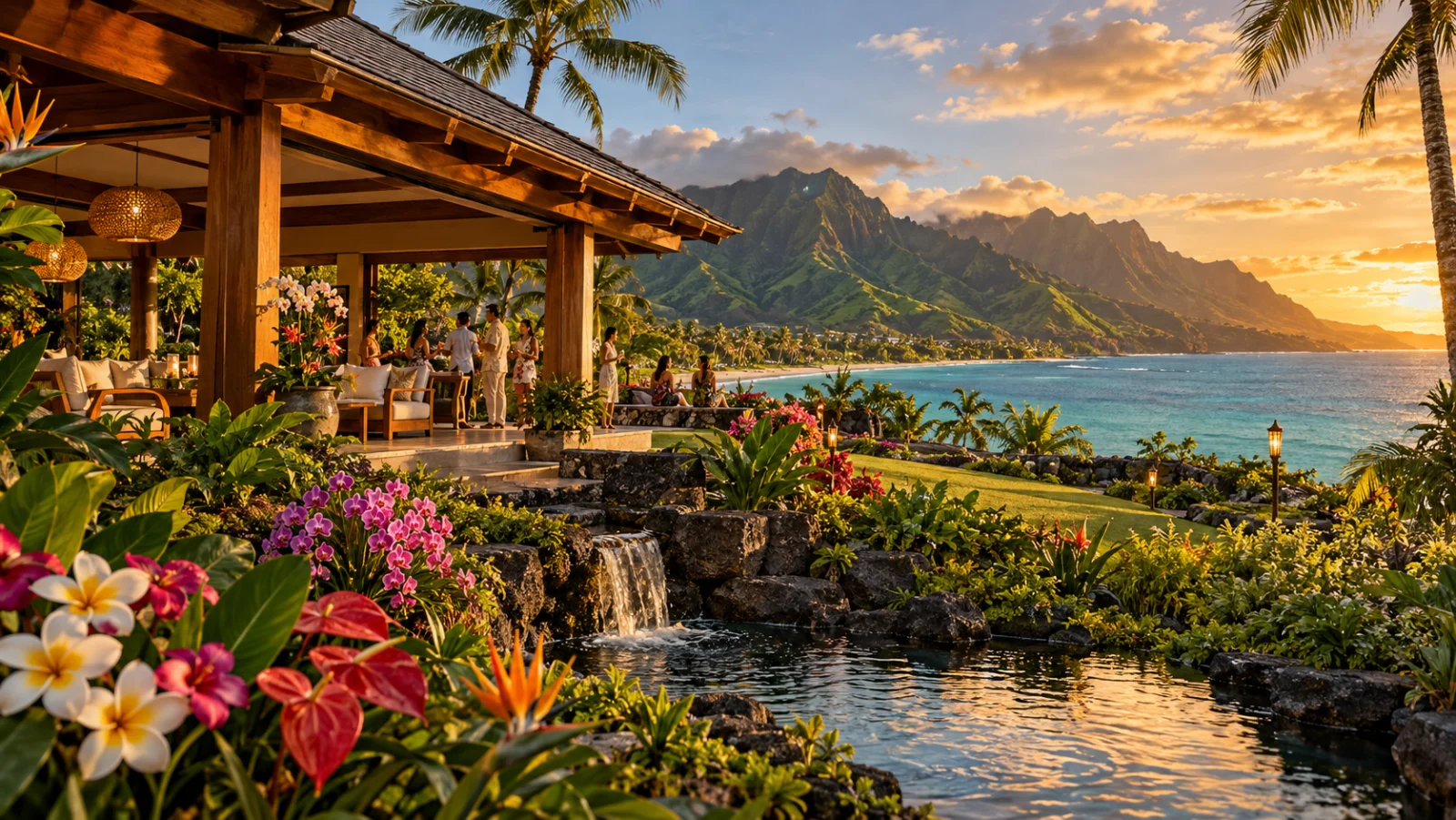
Do not treat a legend, chant, place story, or cultural practice as freely available marketing material simply because it appears online. Ask who can speak to it and what use is appropriate. An illustrative image cannot establish cultural authenticity, and a generated landscape should not be presented as documentation of a named place. Label demonstration imagery honestly. The business’s own architecture, hosting, materials, and relationships may provide a strong visual direction without borrowing a story it has no authority to tell. Sometimes the most considered design decision is to leave something out.
Give maintenance a named owner
An approved launch can drift as new menus, seasonal offers, and staff biographies are added. Decide who checks new language and how corrections move through the website. Include the language sheet in the handoff, with a clear route for uncertain names. Review a page after it has passed through the actual publishing tool, because formatting can change during entry. Keep a short record of corrections so the same error does not return in a later release. Respect is expressed through these ordinary working habits as much as through the opening headline.
Design with care, then ask for the right review
Soreya Ritual House, An Evermore Original, is a fictional design demonstration, not evidence of cultural authority or a real spa’s services. Our wellness website design approach focuses on clear, careful presentation. When you contact Evermore, tell us which names and passages already have approval and where specialist review is needed. We can make room for that work in the project process. The goal is a website whose visual beauty is matched by attention to the words, sources, and people it represents.
Tell us about your place.