A beautiful website begins before a layout is drawn. It begins with a useful question: what does this business need its website to make possible? For a small restaurant, the answer may be a clear menu and an easy reservation handoff. For a destination venue, it may be helping a couple imagine a celebration while understanding the practical details. Both deserve thoughtful design. They do not necessarily need the same project.
If you are comparing website proposals in Hawaiʻi, start with scope rather than a market average. A number without a clear description of the work tells you very little. This guide explains the decisions behind a proposal and the starting prices Evermore publishes, without pretending every business needs the same solution.
Begin with the journey you need
Write down the three things a visitor should be able to do. A boutique hotel might need guests to compare suites, understand arrival arrangements, and reach availability. A professional practice might need visitors to understand services, meet the team, and send an appropriate inquiry. These tasks establish the shape of the project more clearly than a request for a certain number of pages. A short website can contain complicated integrations; a longer editorial site can be technically straightforward. Ask a designer to explain the work in terms of your actual customer journey.
Evermore’s published starting points
Tailored Worlds start at $2,500. A Tailored World begins with one of our ten Evermore Original designs and adapts it to your business, photography, copy, brand, and booking links. The published timeframe is 10–14 days. Focused Websites start at $4,500, with a published timeframe of 4–6 weeks, for a custom site with a clear, focused brief. Signature Websites start at $7,500, with a published timeframe of 6–8 weeks, for fully custom art direction and storytelling. These are starting points, not a quote for an unspecified project. Your written proposal confirms the scope, price, and schedule before work begins.
What changes the amount of work
Original art direction, the number of distinct layouts, content preparation, photography requirements, and supported integrations all affect the work involved. A wedding venue with several event spaces needs a different information structure from a restaurant with one dining room. A membership business may need connections that a simple inquiry site does not. Ask which requirements are included and which depend on another platform. A useful proposal names these boundaries plainly. It should also say what you need to supply and how decisions are approved, so the project is not priced around assumptions neither side has discussed.
Content is part of the investment
A designer cannot responsibly invent your room amenities, treatment credentials, cancellation policy, or event capacity. Before requesting a proposal, gather approved business facts, current photography, and the wording that must remain. Note where material needs editing or creating. If your audience includes visitors planning from the mainland or Japan, consider which arrival questions or translated information they actually need. Translation, photography, and substantial content production should be identified in the scope rather than quietly assumed. Good preparation gives the project a firmer foundation; it does not mean you must arrive with a perfectly written website.
Understand the booking and inquiry handoff
A button that opens an existing booking provider is a different task from a custom connection that passes dates, room choices, or customer information between systems. Ask the designer to demonstrate the intended route. Which system owns availability? Where is payment taken? What happens if the visitor has a question? For a venue, a useful inquiry form may matter more than an elaborate booking feature. Describe the outcome you need, then confirm what your existing tools support. Avoid paying for an impressive-looking control that cannot connect reliably to the business behind it.
Separate launch work from ongoing care
The website project and its life after launch are related, but they are different commitments. Ask who handles hosting, updates, backups, and future changes. Confirm whether third-party subscriptions are paid separately and who owns those accounts. Evermore’s care plans explain ongoing support options; your project proposal should make the handoff clear. A restaurant changing menus often may need a different editing arrangement from a small property with occasional seasonal updates. Plan around the way your team actually works, including who will notice when business information becomes outdated.
Compare proposals on the same basis
Put two proposals beside one another and compare what each includes: page types, content responsibility, image preparation, mobile behavior, integrations, testing, launch, and care. Ask about ownership of the domain, source files, and accounts. Confirm how additional requests are handled after the scope is agreed. A lower opening figure can describe less work; a higher one needs an intelligible explanation. Neither price alone proves quality. Look for a coherent relationship between the business problem, the proposed solution, and the finished work you will receive. Keep the written answers so you can compare them calmly.
Make the decision without rushing it
Evermore projects are paid 50% to begin and 50% at launch. Every project starts with a fixed-price written proposal, and the process can happen by email. When you make an inquiry, share your current website, the kind of business you run, and what feels missing. You do not need to prescribe the design in advance. Our approach to web design in Hawaiʻi starts with understanding the place and the people it serves. For hospitality, our hotel website design service explains the work in more detail.
See a direction, then discuss your own
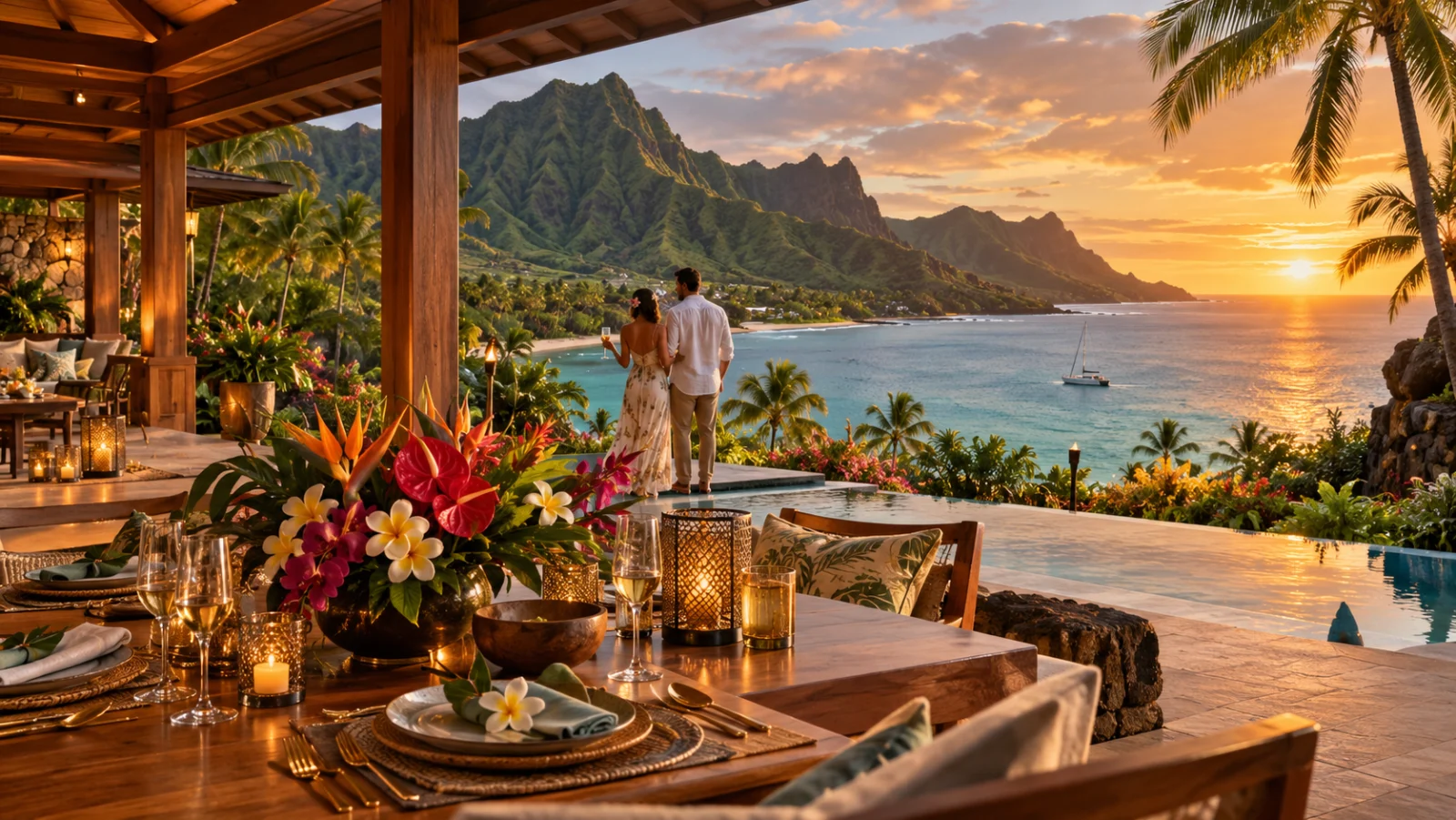
Calyra Bay, An Evermore Original, shows one possible approach to an expressive hospitality website. It is an original design demonstration, not a client result or an operating hotel. Use it to notice the decisions that matter to your own business: the first impression, the room information, and the route toward a booking provider. Then contact Evermore with your place and your priorities. The right starting point is a clear brief and an understandable proposal, with enough room for a website that feels unmistakably yours.
Tell us about your place.