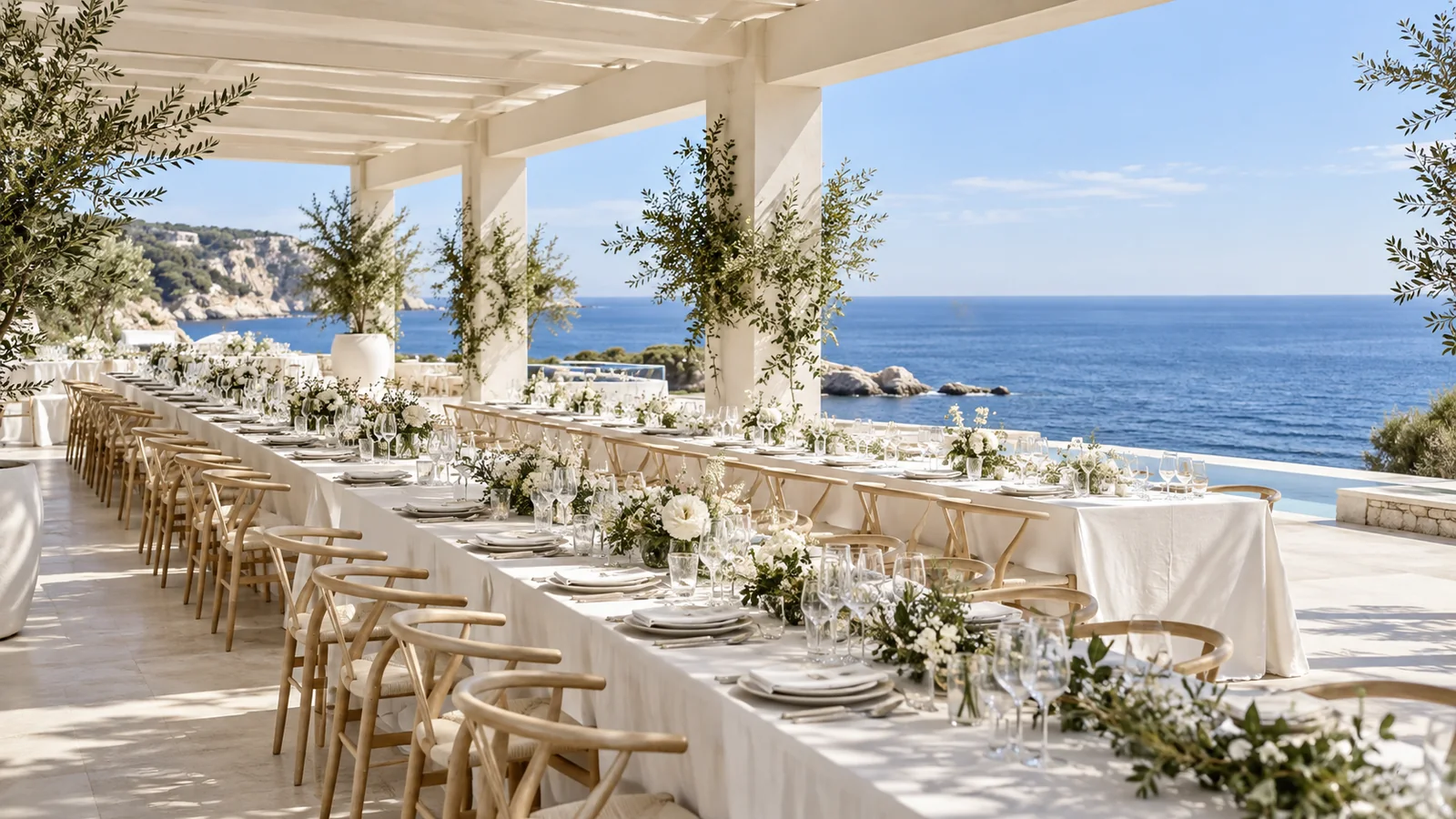
Organize the gallery around the day.
Rather than presenting every photograph in one uninterrupted stream, consider a sequence of spaces: the approach, ceremony, drinks, dinner, and the evening. Show how these settings relate. A wide view helps explain scale; a close detail adds emotion. If galleries show different event layouts, label them so a visitor does not mistake one arrangement for a permanent feature.
Answer the fit questions gracefully.
Capacity, indoor alternatives, guest accommodation, and the venue’s role in planning are not secondary to romance. They help a couple know whether to continue. Create a concise planning section with details confirmed by the venue team. Explain whether catering, coordination, and rentals are included or separately arranged instead of leaving the couple to infer a package from photography.
Give destination guests an orientation.
When couples are planning from another place, the surroundings become part of the decision. Useful travel context, nearby accommodation information approved by the venue, and a clear point of contact can sit alongside the story. Keep changing details such as availability and pricing under the control of the team responsible for them. The website should invite a conversation when circumstances need confirming.
Ask only what starts a useful conversation.
A first inquiry can ask for a preferred date or season, approximate guest count, and a short description of the celebration. Requiring a detailed timetable or fixed budget before the visitor understands the venue may create unnecessary work. Mark optional fields clearly and explain what happens after submission. Avoid promising a response time unless the team can consistently meet it.
Make the evidence honest.
Our Amoret study explores editorial romance through an invented wedding brand. It illustrates design possibilities rather than a venue’s track record. On a real venue website, distinguish styled shoots from actual celebrations and use testimonials only with the necessary permission. Beautiful presentation becomes more useful when visitors can understand exactly what they are looking at.