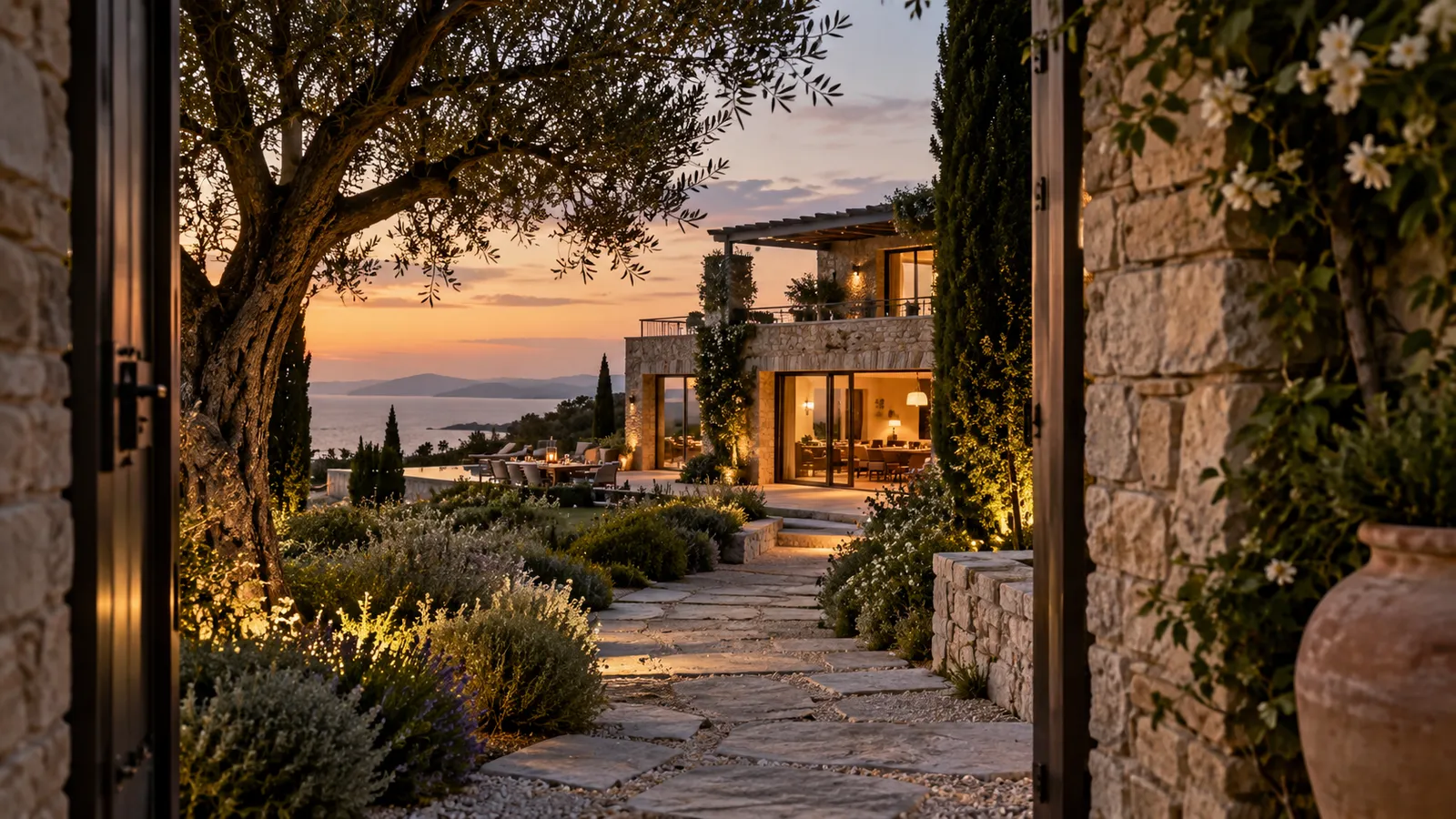
A booking engine can't create desire. It can display availability, calculate rates, take payment, and confirm a reservation. But by the time someone reaches it, most of the decision has already been made somewhere else.
That's why the booking journey begins before the booking engine. It happens in a series of small yeses.
The first yes is attention
Before anyone considers dates, the website has to earn a few more seconds. The visitor is asking, often unconsciously: is this relevant to me, is it worth exploring, is this the kind of place I hoped to find? The opening should answer enough of that to make scrolling feel worthwhile. If the site looks generic, confusing, dated, or slow, people leave before the booking system ever gets its chance.
The second is understanding
Interest isn't enough; the guest has to understand the offer. For a hotel, that means what kind of property it is, what the location is like, how the rooms differ, what's included, and how the stay works. For a venue, it's spaces, capacity, and the inquiry process. For a retreat, it's the program, lodging, schedule, and atmosphere. If basic understanding is hard, the booking engine inherits uncertainty it can't solve.
The third is desire
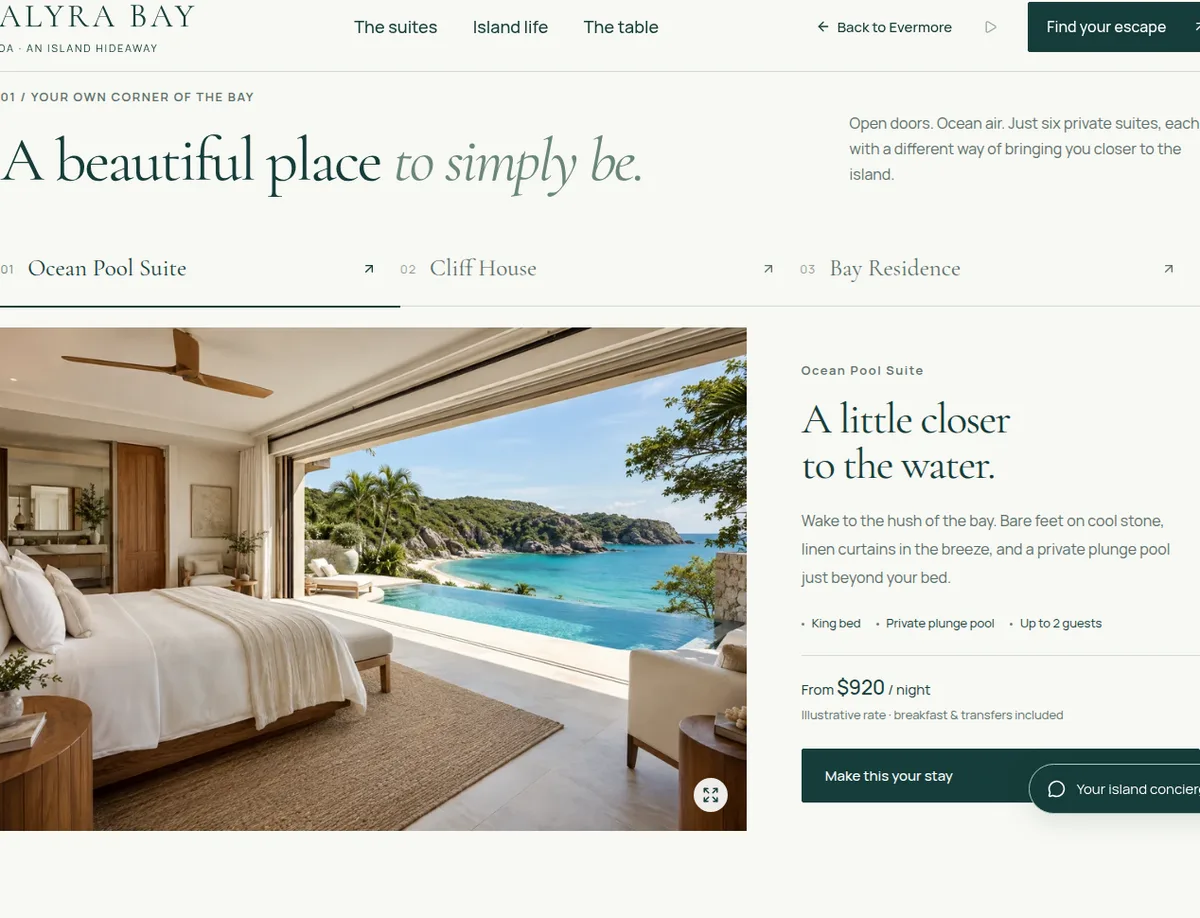
This is where many websites become too transactional. They explain the business correctly without making it feel valuable. Desire comes from specificity. A room isn't just "King Deluxe"; it's where morning light falls across the lanai. A wedding package isn't only a list of inclusions; it's the walk from a garden ceremony to a candlelit dinner. A retreat isn't three nights plus meals; it's a different rhythm of living for a few days.
The website should help guests understand what they're buying emotionally as well as practically.
The fourth is trust
Before people hand a business money, they look for signs the experience will match the promise: clear photography, thoughtful copy, transparent policies, genuine reviews or press where they exist, consistent branding, a site that behaves well on a phone, and a booking step that feels connected to everything before it. Small inconsistencies, like a broken link, a blurry image, or a page that looks abandoned, create doubt. Guests may not consciously notice, but friction adds up.
The fifth is choosing
Most hospitality businesses offer several paths: rooms, suites, packages, experiences, dining times, ceremony spaces, retreat dates. The website should make meaningful differences easy to see without turning everything into a spreadsheet. Helping someone choose is a design problem.
Only then does the booking engine take over
At this point the guest has context. They know what they want, they trust the property, and they're ready for dates and rates. Now the booking tool can do its job, and the best websites make that handoff feel obvious.
Why this matters
Businesses often try to fix direct-booking problems inside the reservation system: new button colors, a moved booking bar, another pop-up. Those changes can help. But if guests aren't reaching the booking engine with enough desire, understanding, and trust, the real problem lives earlier in the journey. A stronger website improves the conditions under which booking happens.
The Evermore view
Your booking experience starts before the booking engine. It begins with the first image, the first sentence, the first sense of the place, and every section after either builds momentum or interrupts it.
That's why we treat hospitality websites as complete customer journeys rather than pages wrapped around a booking button. The booking engine closes the transaction. The website makes the decision possible.
Tell us where your current booking journey starts to lose the feeling.