A hotel website redesign should change more than how the site looks.
If the old site is replaced with newer fonts, cleaner spacing, better photography, and smoother animation, but guests still struggle to understand the property, compare rooms, or move toward booking, the project has left value on the table. A strong redesign improves the whole digital experience. Here's what should actually change.
Positioning should become clearer
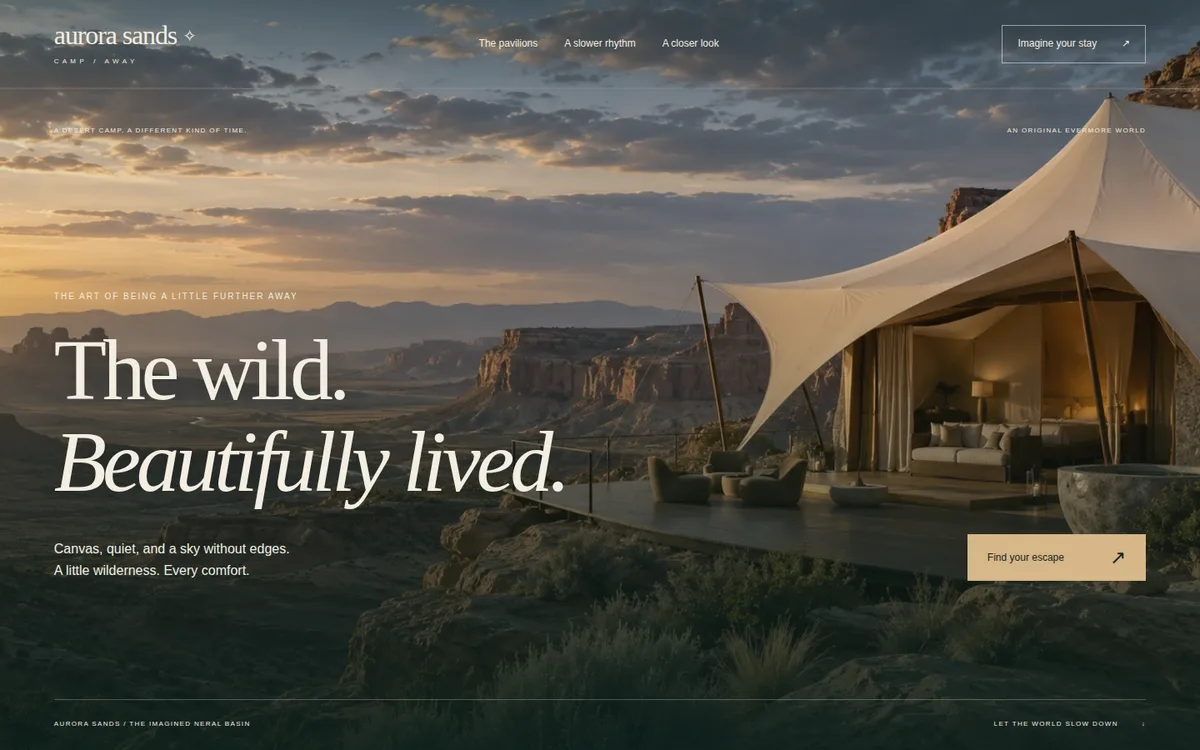
The redesigned site should make it easier to answer one question: why this property? Not why hotels are enjoyable or why the destination is popular, but why this specific stay deserves consideration. Its strongest advantages should appear early and consistently.
The story should become more specific
Older sites accumulate generic marketing language over the years. A redesign is the chance to replace broad claims with useful specifics: the architecture, the location, the history, the food, the privacy, the landscape, the service, the culture. The story should make the business easier to remember.
Room discovery should become easier
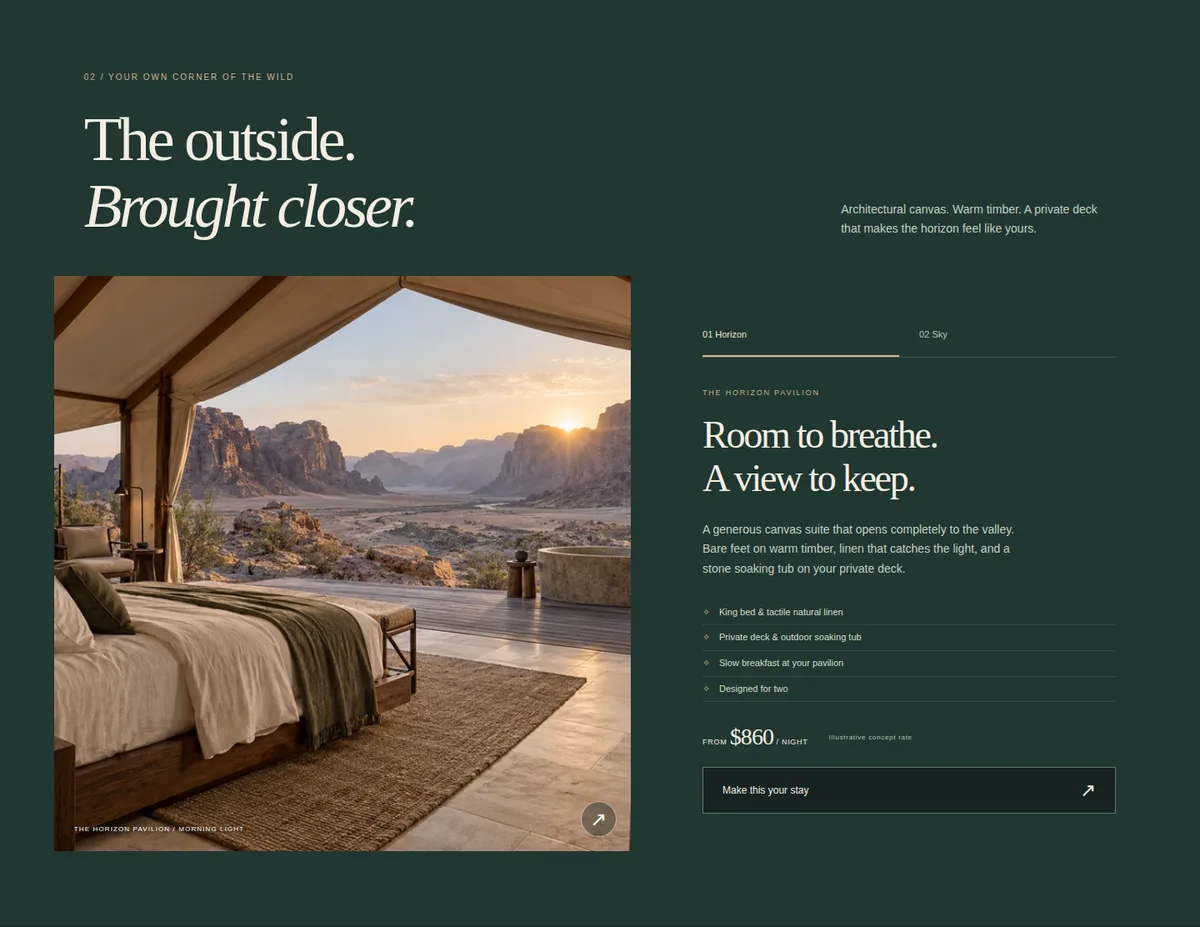
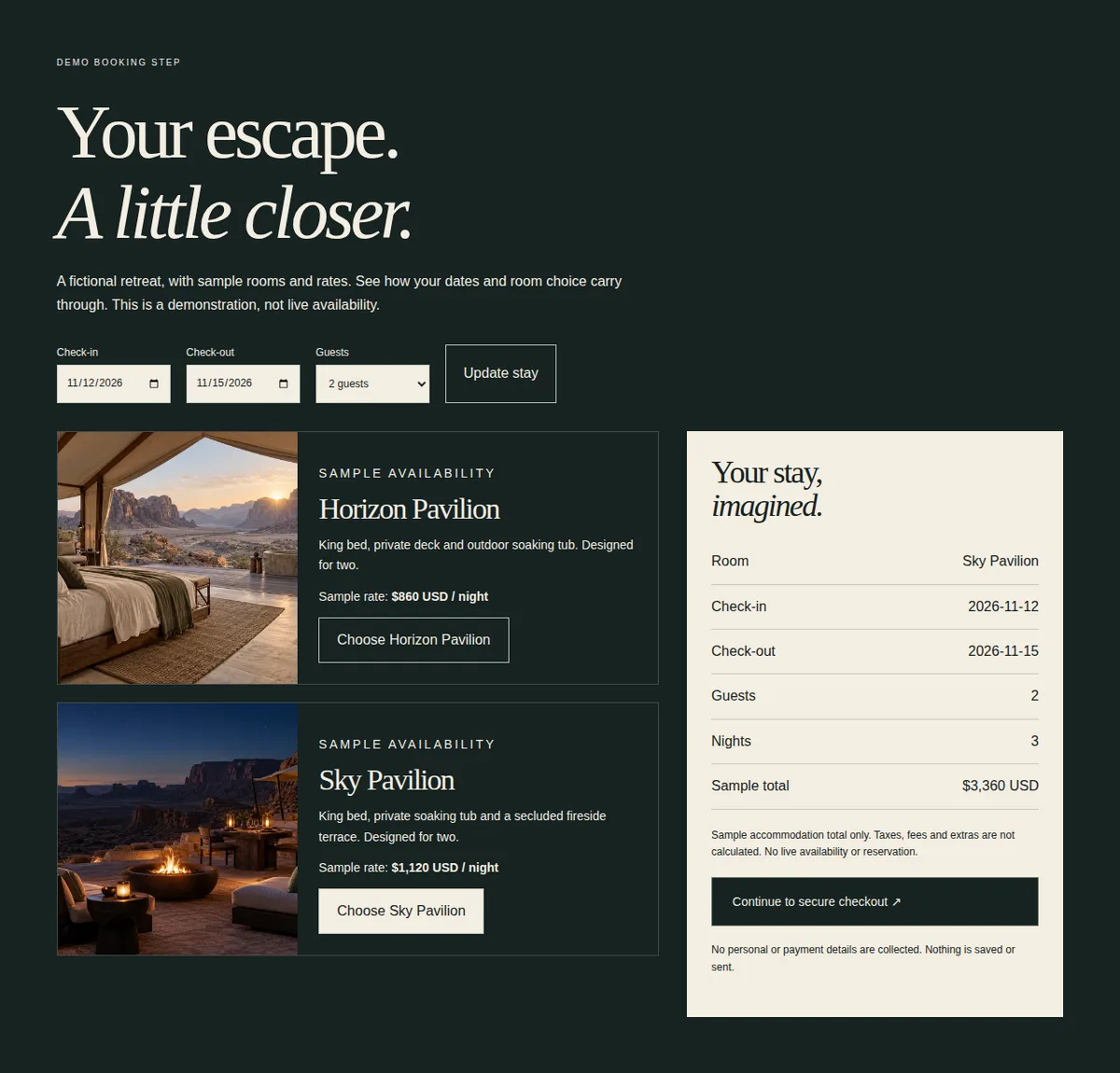
Room pages are among the most commercially important parts of a hotel site. A redesign should improve how rooms compare, image quality, how clearly the meaningful differences come through, occupancy details, and how visible the next step is, especially on a phone. Guests should feel more confident choosing a room after using the new site.
Mobile should become a first-class experience
A redesign isn't successful if desktop looks extraordinary and mobile merely works. Image crops, headline length, thumb-friendly controls, booking behavior, galleries, forms, maps, and the jump into the booking engine all deserve creative direction of their own.
Booking progression should become clearer
That doesn't mean more booking buttons. It means the visitor increasingly understands what the property offers, which stay suits them, what to do next, and what happens after they click. The handoff into the booking engine should feel coherent.
Speed should improve
Beautiful hospitality sites are image-heavy, but that's no excuse for slow pages. Modern image formats, responsive sizes, compression, and loading images only when they're needed make the first meaningful view arrive quickly, without making phones download enormous desktop files. Speed is part of the experience, especially for guests browsing on hotel Wi-Fi or a mobile connection on another continent.
Trust should become stronger
Consistency communicates care. A redesign should remove the small things that plant doubt: broken pages, outdated content, clumsy mobile behavior, inconsistent policies, confusing redirects, low-quality images, and neglected sections. Trust is cumulative, and so is friction.
Updating should become easier
The hotel team shouldn't need a developer for every simple change. Think about what staff will actually update, like offers, seasonal information, rooms, dining hours, experiences, and events. A beautiful site that becomes stale because it's hard to maintain eventually stops being beautiful.
Search visibility should be protected
A redesign shouldn't casually throw away years of search visibility. Addresses of pages, descriptions, internal links, redirects, image descriptions, and content structure all matter. Search should be part of the redesign from the start, not a plugin checklist afterward.
Results should become measurable
If the business cares about direct bookings, inquiries, dining reservations, or packages, the new site should make those journeys measurable. Not to reduce every decision to analytics, but because improvement is easier when you can see what guests actually do.
The Evermore view
A hotel redesign should improve three things at once: how the property feels, how easily guests understand it, and how naturally they move toward a decision.
If only the first changes, it's a visual refresh, and sometimes that's enough. But the most valuable redesigns go further. They make the digital experience more worthy of the business and more useful to the guest.
Considering a redesign? Tell us what you want the next website to do better.