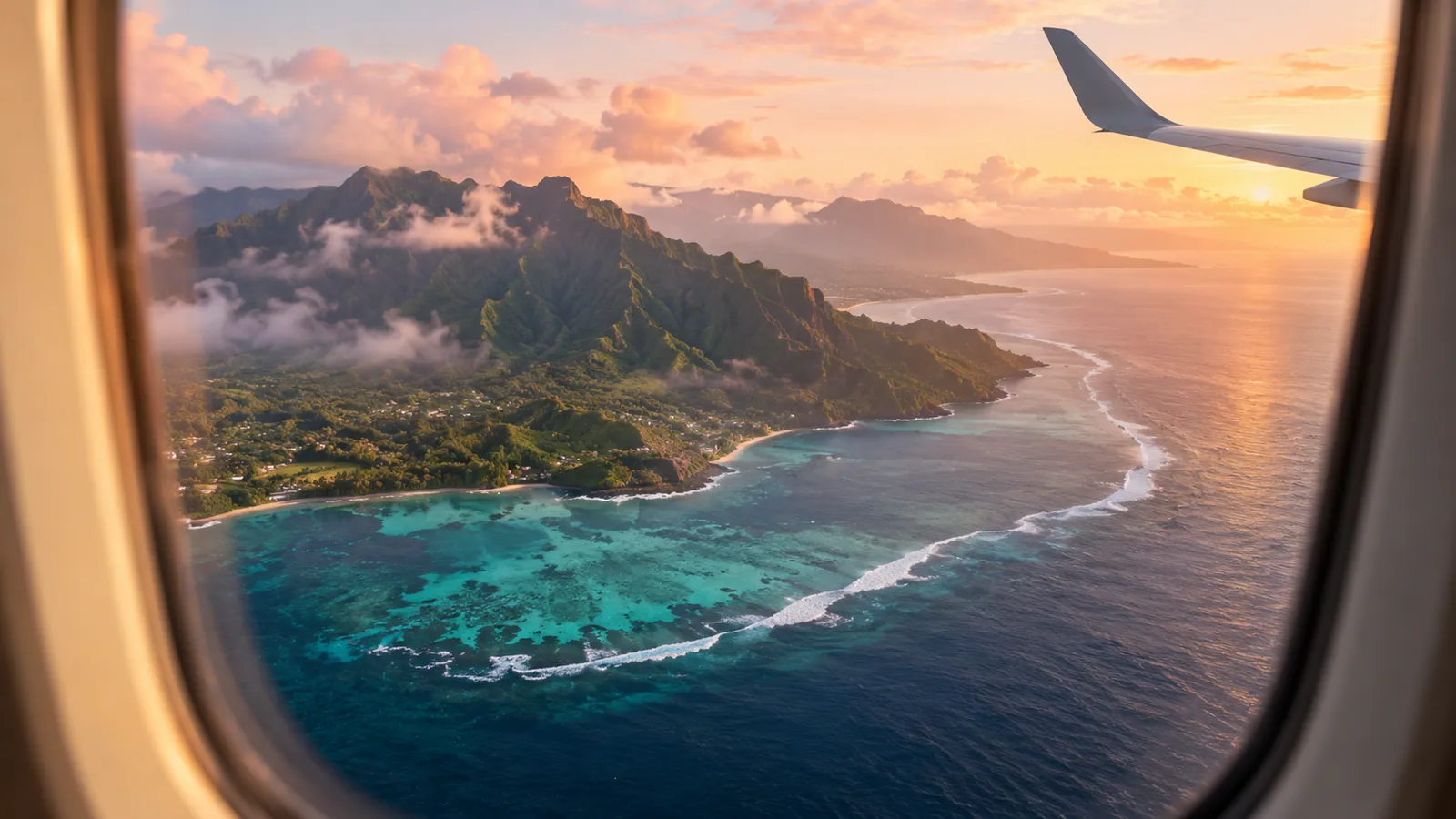
From Honolulu, the West Coast is about 2,500 miles away. New York is nearly 5,000. Tokyo and Sydney are across the Pacific. Guests planning a Hawaiʻi stay from elsewhere may book months ahead, without ever having seen the place in person.
That's true of destinations everywhere: a villa in Bali, a retreat in Tulum, a hotel on the Amalfi Coast, a lodge in Patagonia. And it changes what a website has to do.
When someone books a place they can drive to, the stakes are modest. When they're committing to flights, time off, and a significant sum for a place on the other side of an ocean, the website carries far more weight. It has to bridge the distance.
Distance raises the cost of doubt
A local guest who's slightly unsure might book anyway; if it disappoints, they drive home. A long-haul guest can't. If the room isn't what they pictured, they're stuck with it for a week they planned all year.
So distant guests read websites more carefully. They zoom into photographs. They search for what's not shown. They cross-check booking platforms and reviews. Every vague answer becomes a small reason to book somewhere that feels more certain.
A destination website's real job is to replace uncertainty with confidence.
Show the context, not just the property
Distant guests can't picture the surroundings. They don't know whether "steps from the beach" means a short walk or crossing a busy road, whether the neighborhood is quiet or lively, or how far it is to the airport, a town, or a grocery store.
The strongest destination sites show the property in its setting: wide shots that reveal what's around it, an honest map, realistic travel times, and a sense of what a day nearby actually looks like. That's not a weakness to hide. It's exactly what helps a faraway guest feel they know the place.
Answer the long-haul questions before they're asked
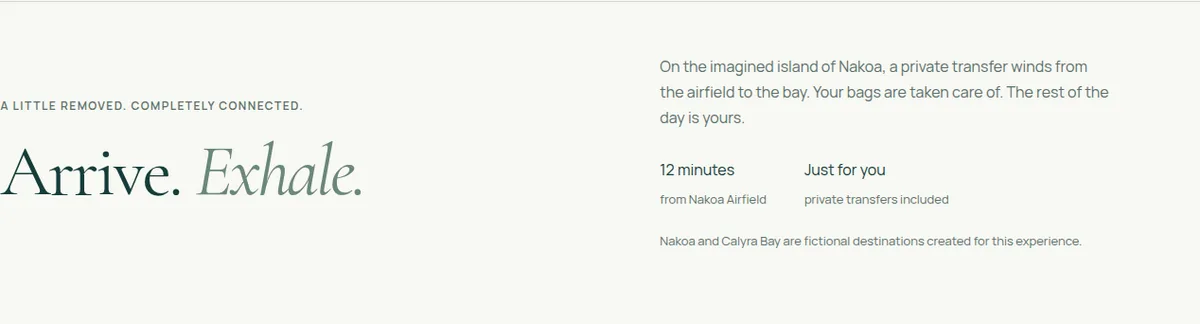
People traveling far have predictable questions: How do I get there from the airport? Is the drive easy at night? What's the weather like in the month I'm coming? What should I pack? Is there food nearby when I arrive late? What happens if my flight is delayed?
Answering these clearly, on the site and in plain language, is one of the most underused trust-builders in hospitality. It shows the property understands what it's like to arrive tired from the other side of the world, which is a promise of good hospitality in itself.
Make time zones and currencies painless
A guest in London looking at a Hawaiʻi property is ten or eleven hours ahead of the front desk, depending on the season. Small details make a difference: showing your local time, explaining how to reach the team ("send us a message and we’ll get back to you soon"), and offering ways to get answers without a phone call. If your booking engine supports it, letting guests see prices in their own currency removes one more moment of friction.
Photography has to do the work of a site visit
Most distant guests will never tour before booking. Your images are the tour. That means showing rooms honestly and completely, including the bathroom, the view from the bed, and the lanai, not just the most flattering corner. It means showing scale, with people or furniture for reference, and showing the place at different times of day.
The goal isn't to make the property look bigger or brighter than it is. Guests who arrive and find exactly what they expected become the ones who write glowing reviews.
Reassurance belongs in the booking moment
The moment before payment is when distance feels largest. Clear cancellation terms, what's included, deposit rules, and a visible way to ask a question all belong near the booking step, not buried in a policy page.
The Evermore view
We're based in Hawaiʻi, a place most guests reach by crossing an ocean. That shapes how we think about destination websites anywhere: they aren't just showing a property, they're building enough trust for someone to commit from thousands of miles away.
A great destination website makes the distance feel smaller. Guests should finish browsing feeling like they already know the place, and that the people running it already understand them.
If guests travel a long way to reach you, tell us about your place.