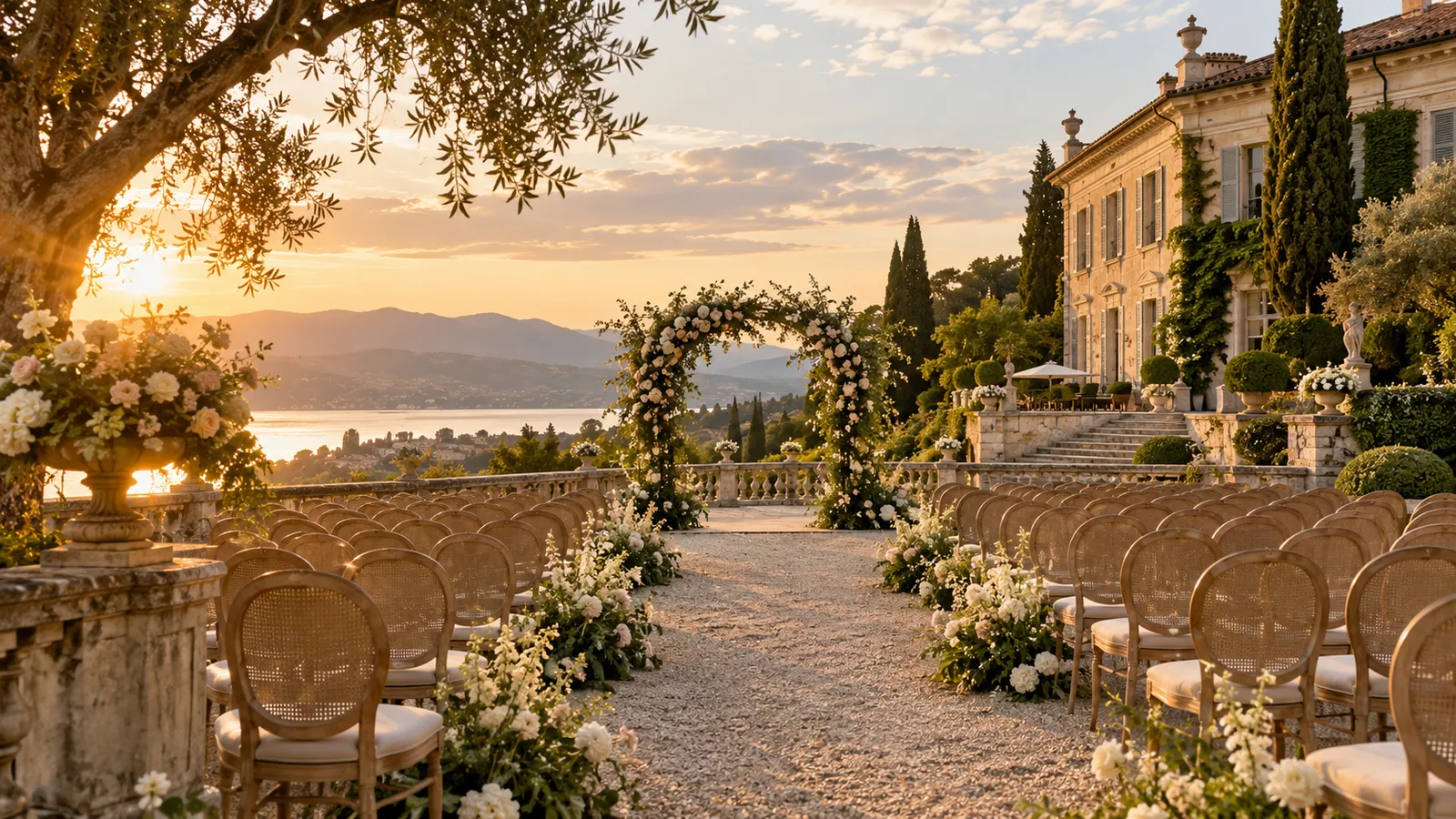
A wedding venue can be breathtaking in person and surprisingly forgettable online. That's a costly mismatch, because couples often meet the website before they consider booking a tour. They found the venue through Instagram, a planner, a directory, or a friend, and they arrive with one question:
Can I imagine our wedding here?
A website can answer that beautifully, or quietly send the couple back to searching.
Couples aren't only looking for a venue
They're trying to picture a day that doesn't exist yet. That makes venue websites different from most business sites: the customer isn't evaluating a finished product, they're building a future scene in their minds. Where would the ceremony happen? Where would everyone gather afterward? What does dinner feel like? What if it rains? Does the place feel intimate or grand? Can we see ourselves here?
A strong venue website helps imagination do its job.
Organize the story around the day
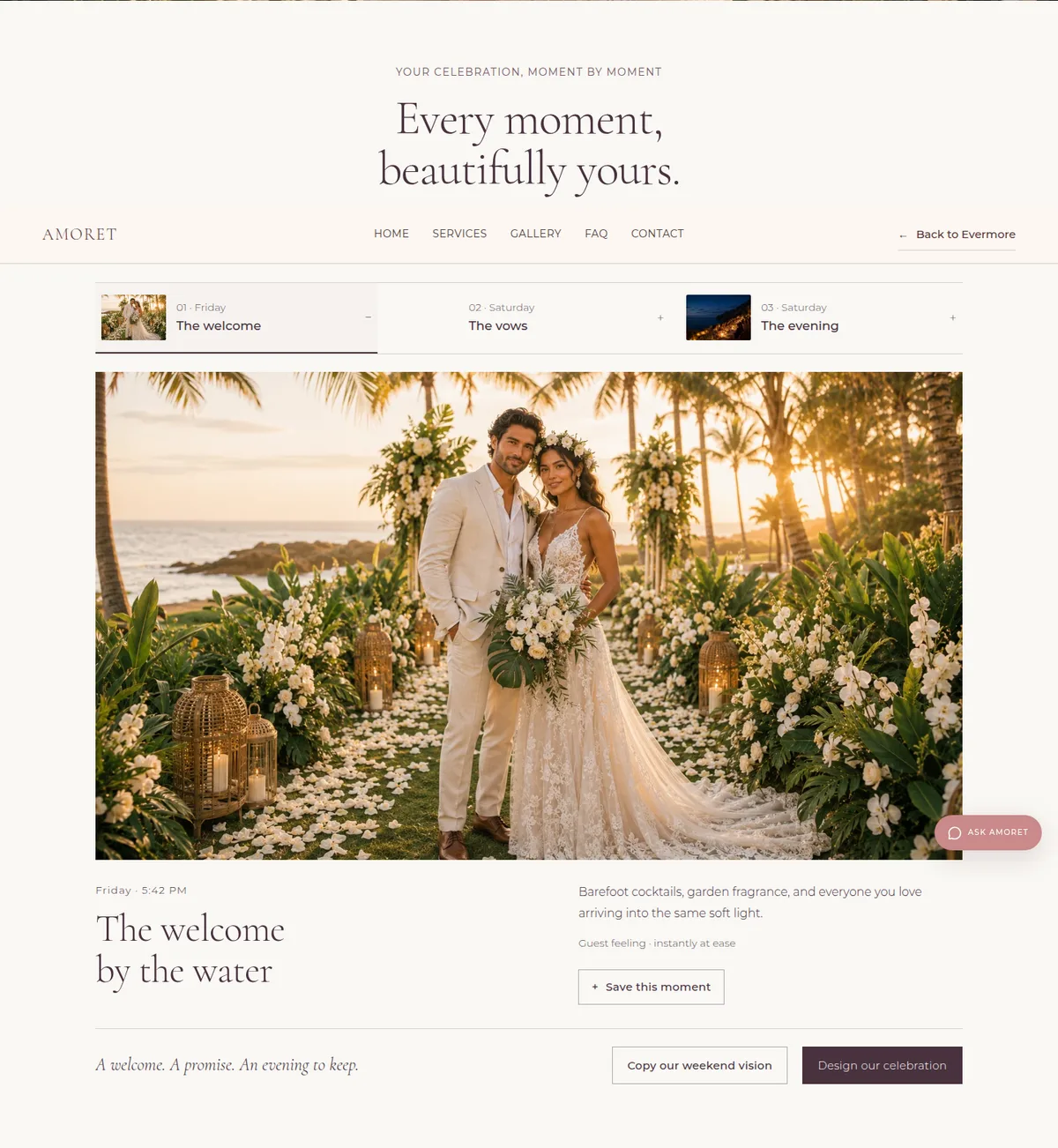
Venues usually have wonderful photography, but a hundred beautiful images can still leave a couple confused about how the property fits together. The fix is to tell the story in the order the day unfolds: the ceremony, cocktail hour, dinner, the evening, and the grounds. That turns photography into a narrative rather than a pile of inspiration. (We cover gallery structure in depth in our guide to wedding venue gallery structure.)
Generic language weakens extraordinary places
"Where dreams become reality." "Timeless elegance." "Where love stories begin." Venue websites are full of lines that could belong to any venue anywhere. Generic romance isn't positioning; specificity is.
If the venue is extraordinary because of its architecture, say so. If it's private and intimate, show what that means. If guests can stay on property, make the whole weekend visible. If the landscape is the star, whether that's a cliff above the Pacific or a vineyard at dusk, let it dominate. The copy should help couples understand this place, not weddings in general.
Package confusion creates friction
One of the least romantic parts of wedding planning is comparison. Couples are juggling guest capacity, catering rules, ceremony locations, rentals, lodging, minimums, seasonal differences, and vendor requirements, often for several venues at once.
Not every venue should publish full pricing. But a beautiful site that hides everything behind "contact us for details" creates unnecessary uncertainty. Give enough structure that a serious couple can tell whether an inquiry makes sense. Clear information qualifies leads as well as attracting them.
The inquiry should feel like the next chapter
Many venues put enormous effort into presentation, then end with a generic form: name, email, phone, message, submit. It works, but the inquiry is where interest becomes a business opportunity. Asking for a preferred date or season, an estimated guest count, ceremony and reception needs, whether lodging matters, and what drew them in keeps the moment elegant while giving the venue far better inquiries.
Couples decide on their phones
Wedding research happens everywhere: partners texting links to each other, a parent looking it up, a planner forwarding options, a couple comparing venues from the sofa. Destination couples may be researching from another country entirely. The phone experience has to preserve the atmosphere, the sense of how the property fits together, and an easy path to inquire.
A venue website should help someone imagine their day
That's the central job. Not proving that weddings happen there, not collecting every possible fact, not showing every photograph ever taken. Making the visitor think "I can see us here," and then making the next step obvious.
The Evermore view
A venue website shouldn't merely show people the property. It should help them imagine their day there. The strongest digital experiences combine emotion with clarity, storytelling with useful information, and beauty with an easy next step. When those work together, the website does what the best venue tours do: it makes possibility feel real.
If your venue is unforgettable in person but ordinary online, tell us about it.